


Artificial intelligence is becoming an increasingly familiar part of working life across investment management. But while tools such as ChatGPT and Microsoft Copilot are helping employees work more efficiently, the industry’s next challenge is to harness AI to transform how organisations operate.
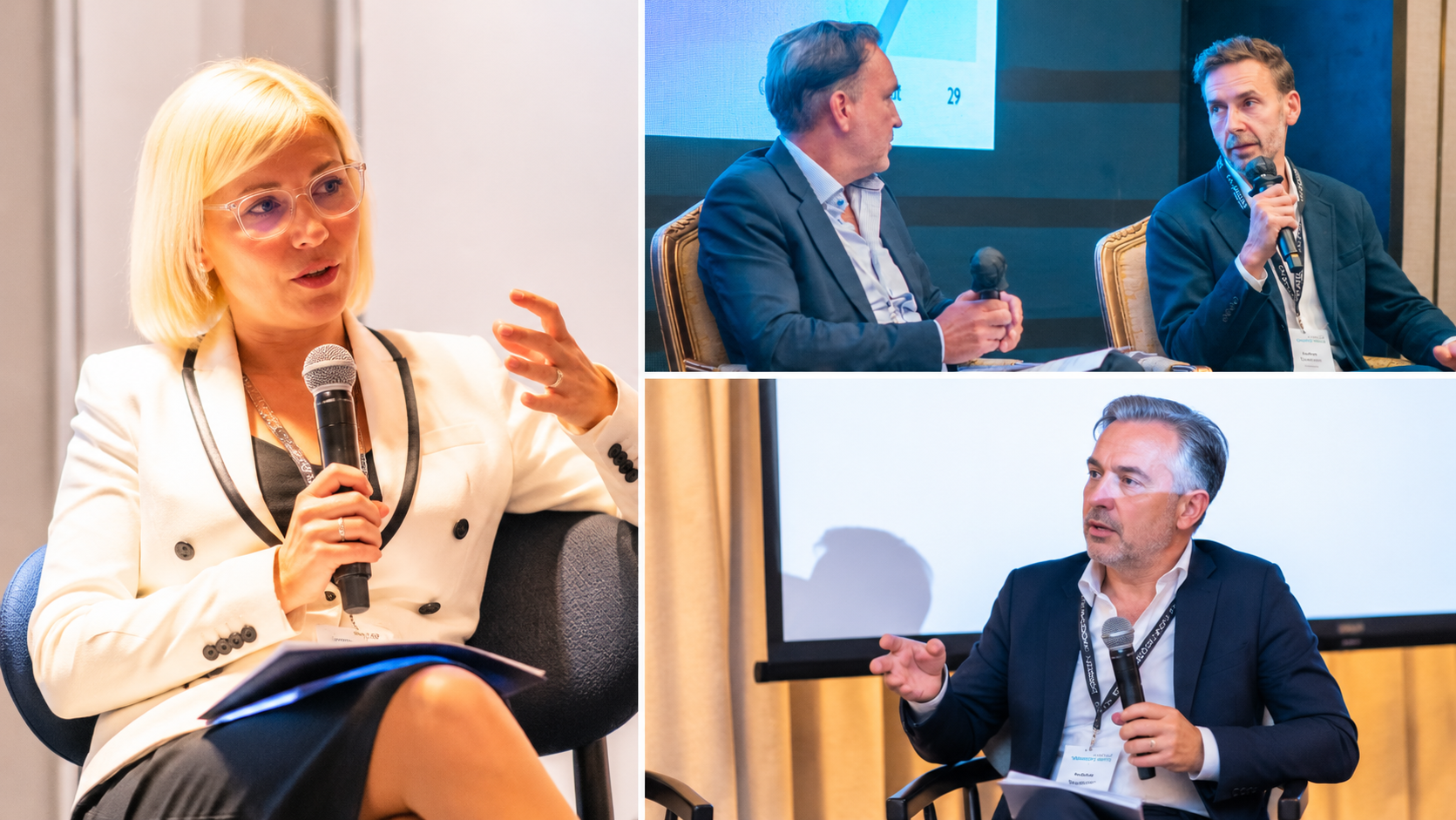
That was the central theme of a fireside discussion I attended between Andrew Tomlinson, Chief Marketing Officer at Calastone, and Nadine Moore, APAC Director, Automation and AI at SS&C, who explored the practical opportunities and challenges of AI adoption.
From individual productivity to business transformation
One observation from the discussion was that much of the industry remains in the first wave of AI adoption, focused on improving individual productivity. Employees are increasingly using AI to draft correspondence, summarise reports and retrieve information, delivering valuable time savings without fundamentally changing the processes around them.
The next wave will focus on broader business outcomes, with AI agents capable of executing multi-step workflows and working alongside traditional automation technologies and human employees.
A practical example brought this to life. An AI agent could receive a client request, retrieve relevant information from multiple systems and investigate any discrepancies before passing the results to a human for approval. Once approved, another agent could prepare the response, arrange its delivery and archive the correspondence.
For investment managers and servicing organisations, this approach could create opportunities across a wide range of activities, including reconciliations, corporate actions, anti-money laundering checks, compliance monitoring and client servicing.
The potential efficiency gains are significant. Nadine pointed to SS&C’s own experience, where an AI-powered correspondence capability saved approximately 800,000 hours last year, with letters produced three times faster.
Rethinking processes before automating them
However, successfully deploying AI requires more than introducing new technology into existing workflows.
With an increasingly complex landscape of AI technologies, it is helpful to simplify what meaningful operational transformation looks like in practice. At its heart are three complementary elements: traditional automation, including robotic process automation (RPA), for repetitive, rules-based activities; AI agents for tasks requiring interpretation, investigation and action; and people providing judgement, oversight and approval where needed.
The real opportunity lies in orchestrating these capabilities across end-to-end workflows, rather than deploying individual technologies in isolation. This is the approach being taken at SS&C, where WorkHQ is the tool of choice for agentic work orchestration, bringing together automation, AI agents and human intervention within coordinated processes.
The challenge for organisations is to determine where each capability can deliver the greatest value. Applying generative AI indiscriminately across every stage of a process can introduce unnecessary complexity and cost.
Equally important is questioning whether existing processes should be automated at all.
Nadine revealed that approximately 40% of the processes SS&C initially considered automating were better suited to redesign. In some cases, existing workflows contained unnecessary checkpoints or activities that could be eliminated altogether.
One point that particularly resonated with me was the need for investment firms to examine how work is performed before looking for ways to execute existing processes more quickly.
Keeping humans in control
As AI becomes more deeply embedded in operational workflows, governance and oversight will become increasingly important.
Nadine emphasised the concept of “permissioned autonomy”, under which AI agents operate within clearly defined boundaries, with access restricted to the systems, data and tools necessary to perform their assigned activities.
This approach allows organisations to benefit from increasingly sophisticated automation while retaining appropriate controls over sensitive information and important decisions.
Yet the challenges of AI adoption extend beyond technology and governance.
Nadine observed that people and organisational culture are often among the most difficult aspects of implementing automation programmes. Employees need to understand how AI will change their responsibilities, while organisations must invest in training and support to help them develop new capabilities.
As digital workers take on more routine operational activities, human employees can increasingly focus on oversight, exception management and higher-value work requiring judgement and expertise.
For me, this reinforced how important it is to bring people along as organisations rethink the way they work.
Where should investment firms begin?
For investment managers here in Australia, the opportunities extend across both operational and investment-related activities.
Alongside reconciliations and AML processes, the discussion highlighted potential applications in investment research, risk monitoring and regulatory reporting. AI could also help fund managers consolidate and analyse information from multiple service providers, improving oversight and enabling earlier identification of emerging issues.
However, her advice to organisations looking to expand their use of AI was to start with visibility and governance.
Before scaling adoption, firms should establish a clear picture of where AI is already being used across their businesses. This includes capabilities embedded within existing technology platforms, as well as tools adopted independently by individual teams and departments.
Without that understanding, organisations risk introducing overlapping capabilities, inconsistent controls and additional operational complexity.
As Nadine observed, organisations cannot effectively govern or scale technology without first understanding where it is being deployed.
My main takeaway from the discussion in Sydney was that the next phase of AI adoption will depend on the foundations firms put in place today: rethinking workflows, orchestrating automation, AI agents and human expertise, and establishing the governance needed to deploy these capabilities confidently at scale.
For organisations considering how to translate these opportunities into practical operational change, I’d welcome the opportunity to continue the conversation.