


At Calastone’s recent Connect Forums, we explored the megatrends reshaping the investment industry and what they could mean for the way firms operate, compete and serve clients. Against that wider backdrop, artificial intelligence stood out as an especially immediate area of change. The question is no longer simply what the technology might make possible, but where it can deliver practical value today.
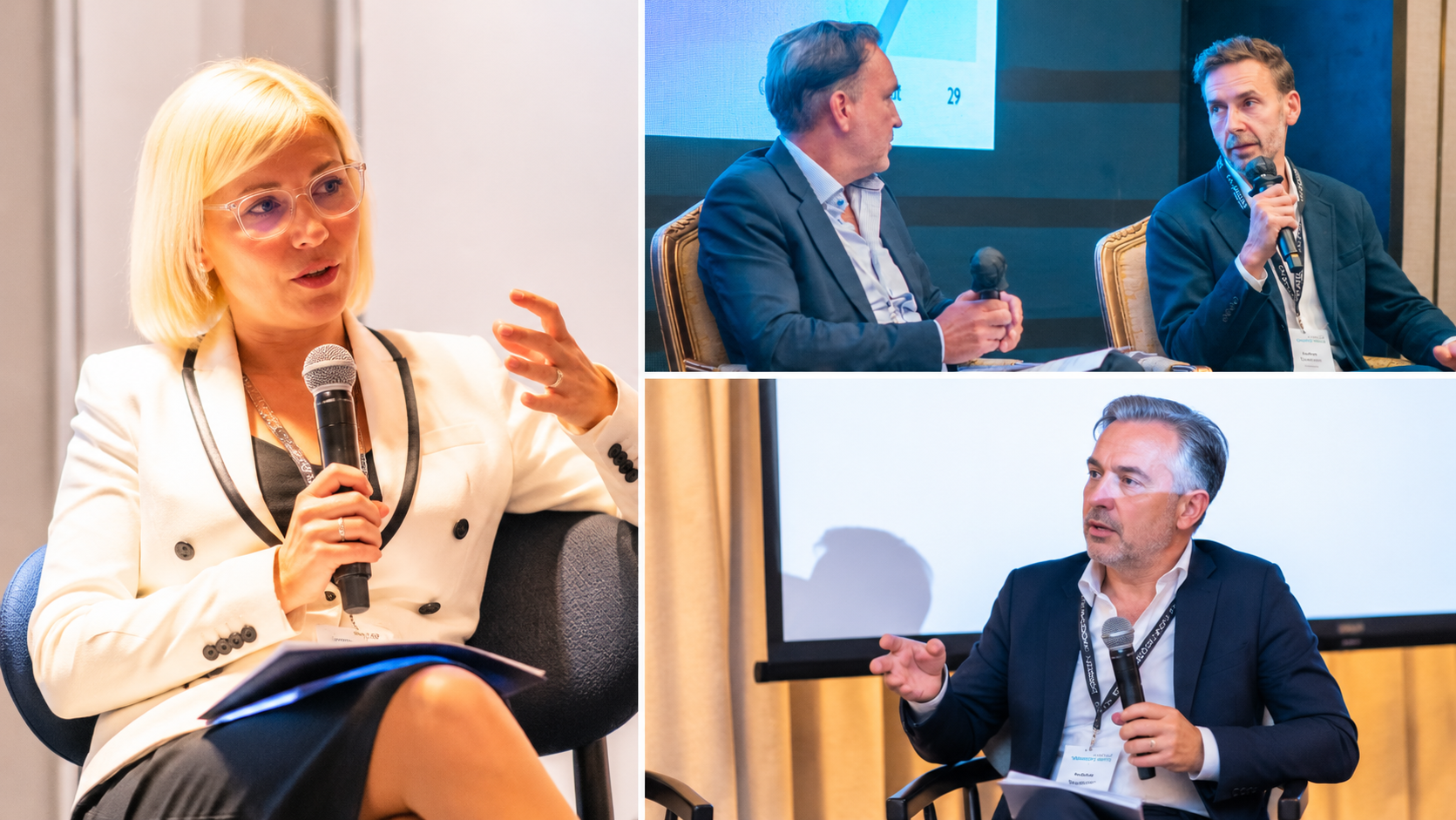
I had the opportunity to host a series of fireside conversations in Sydney, Singapore, Hong Kong and Taiwan with Nadine Moore, APAC Director, Automation and AI at SS&C, and Jens Boegh-Nielsen, General Manager for Automation and AI, APAC and Japan at SS&C. We focused on what it takes to apply AI within the complex processes that underpin investment management and servicing, and where the greatest opportunities might lie.
One idea has stayed with me. We spend a great deal of time asking how AI can help us do things faster. Perhaps the more valuable question is whether some of those things need to be done in the first place.
Nadine shared a revealing finding from SS&C’s automation work: approximately 40% of the processes initially examined for automation were ultimately considered better suited to redesign. Some contained unnecessary steps or approval points that could be removed, rather than replicated with new technology.
For an industry where operational processes have evolved over many years, often across multiple systems and teams, that is a significant distinction. Automating a complicated process might make it faster. Rethinking the process could make it simpler altogether.
Beyond individual productivity
Much of the early enthusiasm for AI has focused on what it can do for individuals: drafting correspondence, summarising documents or finding information more quickly. Those are useful improvements, but the wider workflows around them often remain unchanged.
The more interesting opportunity emerges when AI agents can coordinate activities across applications, undertake investigations and involve employees at the points where judgement or approval is needed.
Take a client enquiry. Rather than an employee manually retrieving information from several systems, checking discrepancies and assembling a response, an AI agent could bring the relevant information together, investigate an exception and present a proposed resolution for review. Once approved, other automated steps could complete the response and record the outcome.
Jens highlighted fund reconciliations as a particularly promising application. Today, an exception often triggers a manual investigation. In future, an AI agent could examine the underlying information, identify the likely cause and, within clearly defined parameters, potentially resolve the discrepancy. For firms dealing with significant transaction volumes, that shift could have a substantial operational impact.
There is already evidence of what focused automation can achieve. Nadine described SS&C’s experience with AI-powered correspondence, which saved approximately 800,000 hours last year and enabled letters to be produced three times faster. That is a compelling efficiency gain in its own right. The next opportunity is to connect such capabilities across a broader process, rather than improve isolated tasks one by one.
The right technology, not AI everywhere
One of the clearest messages from the discussions was that successful transformation is unlikely to come from applying generative AI indiscriminately. Different activities call for different approaches.
Traditional automation, including robotic process automation (RPA), remains effective for repetitive, rules-based work. AI agents can help with activities requiring interpretation, investigation and action. People continue to provide judgement, supervision and approval where it matters.
The challenge is not simply choosing the right technology for each activity, but coordinating these capabilities across complete workflows. The objective should be to design the most effective process, not to use the most sophisticated technology at every step.
More autonomy demands clearer boundaries
Naturally, giving AI greater responsibility raises questions about control. This was a recurring theme across the conversations, particularly in the context of regulated financial services.
One important concept we discussed was ‘permissioned autonomy’: allowing an AI agent to act within clearly defined responsibilities, with access only to the data, systems and tools required for its task. The important distinction is between an agent that can investigate and recommend an action, and one that is authorised to carry it out without further approval.
As Jens observed, the move from identifying an exception to investigating and potentially resolving it changes the governance questions firms need to ask. Where should human approval sit? How are decisions monitored? And how do organisations maintain consistent controls as different forms of automation spread across business functions?
There is a human dimension too. As routine work becomes more automated, employees may spend more time overseeing outcomes, dealing with complex exceptions and applying specialist expertise. That makes training, communication and confidence in the technology as important as the technology itself.
Bringing these capabilities together requires more than individual AI tools. Organisations need a way to coordinate traditional automation, AI agents and human intervention across business processes, while maintaining appropriate governance and oversight.
This is the approach behind SS&C’s WorkHQ, which brings these different capabilities together through a common orchestration platform. It provides a practical example of how firms can move beyond isolated AI applications towards more coordinated, end-to-end automation.
Preparing for a moving target
Another challenge is that AI adoption is not always happening through a single, deliberate programme. Capabilities are increasingly embedded in existing software, while individual teams may be exploring their own tools. Before introducing more AI, firms need to understand what is already in use, where capabilities overlap and whether appropriate oversight exists.
The technology will continue to change. Jens emphasised the importance of avoiding excessive dependence on any one model or solution. Organisations need enough flexibility to adopt new capabilities without repeatedly rebuilding the operating processes and controls around them.
The potential applications extend well beyond back-office processing, from investment research and risk monitoring to regulatory reporting and the analysis of information from multiple service providers. But I came away from the forums thinking that access to the latest model will not, on its own, determine which firms benefit most.
As powerful AI capabilities become more widely available, the advantage is likely to come from how intelligently organisations apply them: simplifying work, connecting systems, setting clear boundaries and helping people make better decisions.
For me, that leaves one question worth asking before any new AI initiative begins: if we were designing this process today, would we choose to do it this way at all?